- TFS Podcast
- Support This Site

Valuable answers for valid questions about world religions, cults, worldviews and the Christian church
This site contains over 130 pages of free content in articles, videos and audio – it might be faster to use our search function to find what you are looking for
The truth of an afterlife of some kind has been put into the heart of all humanity as far back as history takes us. The ancient Egyptians and Babylonians buried their affluent dead with many items of their life on earth so that when they arose in the afterlife, they would have use of them. Needless to say, those items remained untouched until either a grave robber or archaeologist finds them. Some ancient Assyrian and Shamanists believed that a person’s spirit wanders the earthly plain as a ghost; a belief that persists today among those who dabble in the occult. Here is one of many verses in the Bible which reveals what God has planned for humanity upon death:
"And inasmuch as it is appointed for men to die once and after this comes judgment,"
Hebrews 9:27
"Do I have any pleasure in the death of the wicked,” declares the Lord God, “rather than that he should turn from his ways and live?"
Ezekiel 18:23
This page takes a look at what a few of the world’s major religious and non-religious systems have to say about what happens when you die. It is evident that the Bible is true when it says, “He has put eternity in the hearts of all men.” (Eccl 3:11). As there have been many people who spent their entire lives and careers mocking and denying any notion of a Maker or an eternity after death, I’ve included a few eyewitness accounts of the last words spoken by some of these men. There is a brutal honesty apparent once the pride of life is stripped away from them and they are left only with the raw truth of their own death and eternity:
Aleister Crowley was an occultist “warlock” of sorts who infamously wrote books on how to conjure demons – even driving his own wife into an insane asylum after conjuring a demon to possess her. He was called the “most wicked man alive” by the press in the 1940s. He is cited as an inspiration to the Beatles (appears on Sgt Pepper album cover), Led Zepplin (Jimmy page purchased and lived in his vacant house) , Jay Z, Beyonce, Elvis and many others. He believed himself to be the antichrist (son of the devil) and believed that satan would come and establish his throne at any time…this all came crashing down when he was on his deathbed and aware that death was imminent:
"I am perplexed. Satan, get out"
Aleister Crowley
Author of the Satanic Bible and high priest of the religion dedicated to the worship of Satan. He was a great admirer and follower of Aleister Crowley. One of his famous quotes was: “There is a beast in man that needs to be exercised, not exorcised.” When at last his eyes were opened to the deception and lies of the demon he put his faith in, his words upon his death bed were:
"Oh my, oh my, what have I done, there is something very wrong. . . there is something very wrong.”
Anton Lavey
Among the Jewish line of thinking, there is a belief that this present life is all there is and that one’s present accomplishments and ‘legacy’ are what makes that person immortal. There is also a small contingency that recognizes that YHWH has always referred to Himself as the G-d of the ‘living’ and not of the ‘dead’ and subsequently believe in an afterlife referred to in Jewish writings as the “bosom of Abraham”. This is place of ‘paradise’ for the righteous and ‘Sheol’ is a place of suffering for the unrighteous. The way to determine one’s ‘righteousness’ is unclear, possibly based on devotion to family, good works, temple/synagogue etc. There is no definite gauge by which one can recognize if their righteousness is enough to warrant the ‘bosom of Abraham’ when they die.
If I am Jewish:
If one adheres to Islam, Allah, the god taken by Mohammed makes a final judgement on his followers upon their death and their admittance to ‘heaven’ is only granted at his discretion, regardless of their lifetime of commitment or good works, he can still override their accomplishments and bar them from entering. The only supposed direct access to the Muslim heaven is by dying in a Jihad (holy war with unbelievers). This explains why so many extremist Muslims are willing to strap bombs to their chests and kill innocent human beings in Israel, Afghanistan, or Iraq. They believe that not only will they (the perpretrator) go to Muslim heaven, but those they kill will go to heaven as well (if they are Muslim). Their non-Muslim victims are part of an unbelieving race in opposition to Allah and by killing them, the perpetrator is convinced that they are committing a holy war act by suicide and both somehow go straight to the Muslim heaven filled with endless sex with virgins (similar to Mormonism).
If I am Muslim: I will never know where I am going when I die despite a lifetime of good works and devotion to Allah, the only way I can supposedly know for sure, is if I die via a Jihad which often involves murdering innocent people.
If one is atheistic/humanistic in their beliefs, then there is no afterlife, just an end. The atheist believes that after death, there is nothing. This is based on the presupposition that men and women are nothing more than animal in composition, possessing neither a soul nor a spirit. All thoughts are as a result of a chemical transfer between synapses in the brain. This Darwinian outlook on life offers absolutely no explanation for the vast difference between the most intelligent animal on the planet and the least intelligent man on the planet. Ultimately, this view of the afterlife appears to quell a nagging uneasiness within the atheist. They no longer have to feel that they will be held accountable for the life they chose to lead.
Creating a view on afterlife whereby a human being simply dies with the absence of any activity whatsoever whether good or bad, happy or sad, most likely brings a sort of temporary peace of mind that allows the atheist to live as he or she would desire without any consideration for long-term consequence.
We can see evidence of this mindset in the final interview with Jeffrey Dahmer, a notorious serial killer and, prior to his final days in prison, a devout atheist. Unfortunately for the atheist, agnostic, Humanist, Darwinist, etc this view of the afterlife was/is arrived at in a very “unscientific” manner where there is zero data to evaluate and analyze, no way of recreating the event in a controlled laboratory for observation, no eyewitnesses, and no logical rationale, hypothesis, or theory for arriving at the conclusion that there is “Nothing after Death”. Because of the absence of scientific evidence, one can conclude that this belief actually requires more faith than even the most far fetched of religious afterlife scenarios. According to the atheist, they have this life and this life only to accomplish their hearts desire since, for them, no afterlife exists.
If I am an atheist: There is nothing to live for beyond this life, and since this life seems to hold many improprieties with regards to human behavior, there can be no sense of justice, just the looming despair of death and utter nothingness. Or, if the theists are correct, even worse. If I am an atheist, I must operate in more faith than the theists in believing that nothing exists beyond death. I do this by discounting all of the many first hand experiences and reports of an existing phenomena beyond life.
Thomas Paine was the leading atheistic writer in American colonies – his famous work “Common Sense” was used as justification for rebellion in the American colonies and the work “Age of Reason” was used as justification for many to abandon their faith in a God who offers forgiveness and eternal life through His Son. Here are his last words as he stared into the great depth of separation from the God of life for all eternity:
""Stay with me, for God's sake; I cannot bear to be left alone, O Lord, help me! O God, what have I done to suffer so much? What will become of me hereafter? I would give worlds if I had them, that The Age of Reason had never been published. O Lord, help me! Christ, help me! No, don't leave; stay with me! Send even a child to stay with me; for I am on the edge of hell here alone. If ever the Devil had an agent, I have been that one."
Thomas Paine
Voltaire was a famous anti-Christian atheist said to his physician, Dr. Fochin: “I will give you half of what I am worth if you will give me six months of life.” When he was told this was not possible, he said “Then I shall die and go to Hell!” His nurse said: “For all the money in Europe I wouldn’t want to see another unbeliever die! All night long he cried for forgiveness.”
"I have swallowed nothing but smoke. I have intoxicated myself with the incense that turned my head. I am abandoned by God and man.”
Voltaire
If one is of the Hindu or Sikh discipline, the afterlife exists in the eternal future and not necessarily as one dies but rather as one dies a determined number of times to . That is to say, when one dies, they come back in a new life as a creature that is properly indicative of the ‘level’ of good (righteous) living that individual experienced in the recently expired life. If one was a complete dolt and utterly unworthy of humanness in a current life, they might expect to come back in the next life as a donkey. Or, if one was particularly good (which to a Hindu means to observe the structure of ‘caste’ society – avoiding and neglecting the ‘untouchables’, worshipping as many Hindu gods as I could when I could – offering constant sacrifice in their temples, and didn’t steal, kill, or destroy from anyone) then one might expect to come back in their current caste level or maybe even a higher caste. These castes continue up and up until the Brahman (priestly) caste is reached. At which point, one might attain enlightenment in this life and upon death attain to Nirvana (transmutation into the Brahman of the universe to become one with god and the universe).
Each life is worked out through good and bad karma and when enough bad karma is worked off and when one has stored up enough good karma, then one stands the chance of being reborn into the higher castes and eventually one might become a ‘guru’ or ‘brahman priest’ which is to be worshipped as god incarnate: i.e. Baghwan Shree Rajneesh or Maharishi Mahesh Yogi. and after which, when one dies they attain to ‘Nirvana’.
If I am a Hindu or Sikh, I will never have any idea when I’ve attained enough ‘good’ karma and worked off enough ‘bad’ karma. No one seems to know who is determining this. There is no god in control, just a bunch (33 million to be exact) that exist sometimes at odds with one another. So there is no one in charge and since I don’t know about my karma accounting, I am also not in charge. Also, I am keenly aware that the idea of ‘reincarnation’ which is described above, does nothing to solve the problem of evil, in fact it only perpetuates it. My bad karma must be worked off by a constant victimization at the hands of another human to work it off me. But now that person’s bad karma must be worked off by another, and so on, and so one to eternity. Also, I must agree with Rabi R. Maharaj, the author of “Death of a Guru” who, as a Hindu guru, made an astonishing observation about his own Hindu society: After thousands of years of reincarnation and people being born and reborn, his society should have, theoretically, been getting better and better. But it is not, it is only growing worse and worse. More and more overcrowding and increase in theft, murder, & destruction along with a greater level of poverty led him to abandon the idea of reincarnation and karma.
Mahatma Ghandi was the famous leader of “peace” for India who believed in a Hindu pantheism of gods – all comprising one god even believing that his god was atheism to the atheist. The only religion he had a problem with was Christianity. Apparently he loved Jesus but wouldn’t turn to Him as “Christians were so unlike Jesus”. This is like saying that Mozart is a terrible composer because a kid in your neighborhood sounded terrible when he tried to play Mozart on the piano. Here are Ghandi’s final words once all the deception of the pride of life was stripped away and he was left only with the truth of his own death:
"For the first time in 50 years, I find myself in the slough of despond. All about me is darkness. I am praying for light.
Mahatma Ghandi
If one is a Roman Catholic in their worldview, (this is decidedly different from the Biblical historical Christian worldview) they must embrace the forgiveness of Adam’s original sin provide by Jesus which is via grace + they must have good works (good deeds done for others and observance of the ordinances of the church) + they must have faith in the who they call the “Virgin Mary” (different from Mary of the Bible) + the merits of the Catholic church + the last rites and all other sacraments. Then for those that accomplish all these required things (which no one ever can) they may still have to face a cleansing period between death and heaven known as ‘purgatory’ where the ‘unforgiven’ sins must be ‘burned off’ in a temporary place of torment prior to entering heaven. Those that reject this man-made method of eternal life which can ONLY come via this Catholic religious system, will instead receive everlasting torment and anguish via seperation from God (hell).
This approach to the afterlife is based primarily on the historical teachings and unbiblical traditions of the church, its Popes and incorporates a number of pagan outlooks. It has little to do with what the Bible says regarding the afterlife.
If I am a Roman Catholic, I would join the church based on grace and then somehow hope to accumulate enough ‘works’ to make it into a burning fire of a pre-heaven purgatory? Or, maybe I could accumulate enough works to escape the pre-heaven flames and swing right through to heaven? But how many works is good enough to be saved and/or avoid the mini-hell of purgatory (which doesn’t exist in the Bible) What if I just join the Catholic church and receive Jesus’ forgiveness but fail to do any good deeds because perhaps this all happened last minute or I was an invalid etc. Now, because I have no ‘works’ to accompany God’s grace, I am still condemned to separation from God? You see, the dilemma is, I can never know if I’m saved until the gate slams shut behind me.
That’s a commonality between all man-made faith structures that involve heaven by works – the Muslim, the Mormon, the Jehovah’s Witness and the Roman Catholic. One can never know what will happen when they die until after they die. Grace plus anything else, is not grace at all. How can we have ‘unmerited favor’ from God that is nullified by our supposed ‘merits’ of our own good deeds or failure of ‘merit’?
The Roman Catholic French King. Urged on by his mother, he gave the order for the massacre of the French Huguenots. 15,000 Christian souls were slaughtered in Paris alone and 100,000 in other sections of France by the French monarchy for no other reason than that they loved Christ. This behavior was cheered on by the Roman Catholic Pope and the Roman Catholic church has never repented or admitted wrongdoing for their mass murder of the Huguenots. The guilty king suffered miserably for years after that event. He finally died, bathed in blood bursting from his veins. To his physicians, he said in his last hours:
"Asleep or awake, I see the mangled forms of the Huguenots passing before me. They drip with blood. They point at their open wounds. Oh! That I had spared at least the little infants at the bosom! What blood! I know not where I am. How will all this end? What shall I do? I am lost forever! I know it. Oh, I have done wrong."
Charles IX, Roman Catholic King of France
Because of the Roman Catholic schism from the Chrisitan faith in embracing strange church traditions which nullify the word of God, the Biblical view of the afterlife began to be emphasized near the end of the 12th century with Peter Waldo, in the 14th century with John Wycliffe, near the end of the 15th century with John Hus, and a couple decades later with Martin Luther. This movement to allow the Roman Catholics to schism from the Christian faith while reforming the church back to more of a Biblical view became known as the “Great Reformation”. Many who embraced the Biblical Christian faith were martyred by the Catholic church. Hus and Luther, both Catholic clergy themselves, recognized that the Roman Catholic/Papal view of the afterlife was decidedly unscriptural.
Holding to the inerrancy of the scriptures, Luther rejected the false gospel of ‘faith+works’ and citing multiple scripture references, pointed out that the ‘just shall live by faith’. He asserted that no fair amount of works could ‘earn’ favor with a truly holy, righteous and just God and therefore, according to the Bible, one is saved by grace alone through faith alone.
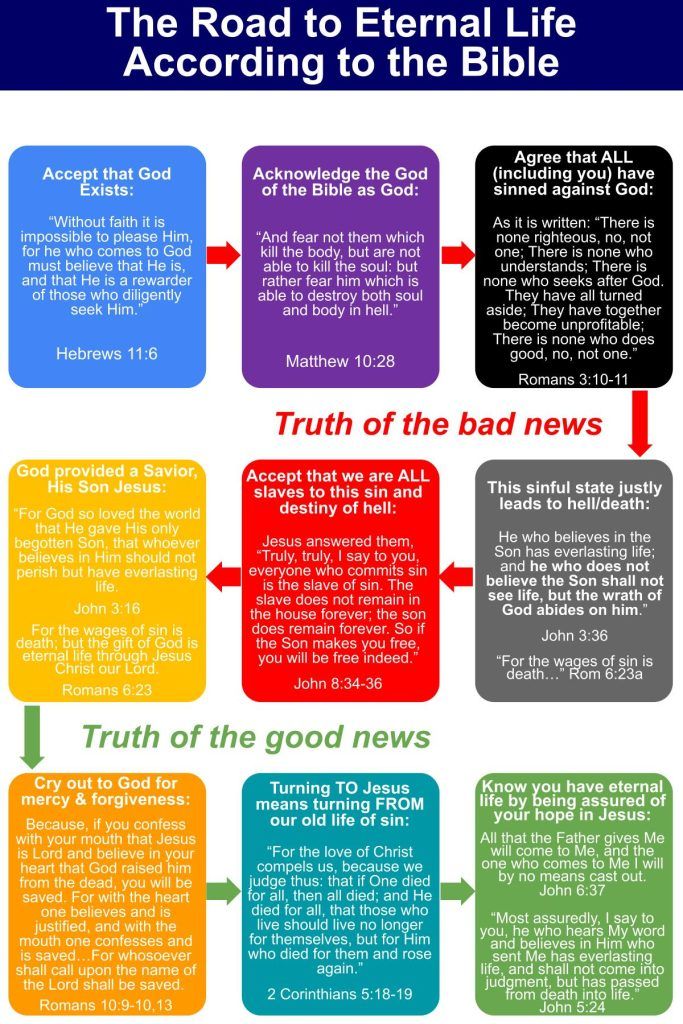
This view involves a conscious recognition of equality with all human beings: all have sinned and the wages of sin is death (separation from God). We are condemned before this one and only holy God and are therefore in desperate need of a Savior – this is true for all. This view refers to sin by its original definition of ‘missing the mark’ and without blood there is no remission of sin. Jesus, being eternally God the Son, died and shed His blood paying the eternal price that none of us could pay.
It is not enough to ‘know’ this, we must turn to Him in faith for forgiveness which entails turning from our past life of sin (repentance). Thereafter, all who would consciously receive Him (Jesus) and his eternal death payment on the cross as payment for their own fallen life of sin, would receive life everlasting, continued life in the goodness of God after death and permanent relationship as sons and daughters to the Father. Those that receive Jesus, receive a new life now and an afterlife of heaven after they die.
This view holds that those that refuse this costly gift that God gave, will simply continue in the fallen separated condition of rebellion that all men exist in outside of Jesus payment on the cross. If the refuser remains in this state at the point of death, then that person is given their lifelong desire of separation from God, only now it will be for eternity whereby all the good God showed in their physical life is gone because their physical life has ended. Now in their eternity, there is no goodness of God for them only the agony of His absence.
When pressed to address the issue of aborigenes or outer mongolian natives who have never had the opportunity to learn of Jesus, those that adhere to this view direct us to the bible passage that explains that God makes sure that ‘enough knowledge’ of Him is given to all men everywhere so that all men everywhere can come to know Him and are therefore, without excuse.
If I am a Bible-believing Christian, I would recogize that I am no different from everyone else in that I ‘miss the mark'(sin) in many ways and if the bible is correct then I cannot expect to receive heaven (presence with The God of Perfect Good) for eternity, if I wanted nothing to do with Him here on Earth – whether that was through clinging to my fallen life of hedonism or by replacing Him with the false god of a false religion which I like better. If I then want to receive life in God’s goodness for the eternity that meets me after I die, then I must be willing to humble myself, confess my sins, ask Jesus, God Almighty, and Son of God Almighty to forgive me of my sins, apply his eternal payment for all mens sins to MY sins and ask Him to wash me of my rebellion and to be my Lord and Savior. This will result in a perfect peace, knowing full well that I will receive heaven after I die, and a life of ongoing sanctification and purposes for God in the meantime.
I did not write this page out of spite or because I ‘hate’ followers of these paths. I write this page because I love those who are caught on these paths and my desire is to warn you ahead of time so that you can avoid an eternity of horror and regret.
No one receives eternal life and eternal presence with God, from who all good things come (James 1:17), by belonging to the right religion or religious organization. Rather only those who trust in the Jesus preached by the Apostles in the Bible for their own sin. We will not trust in a Savior for sins that we either don’t believe we have or that we think aren’t deserving of hell.But the Bible says that ALL have sin and the wages of our sin is eternal separation from God (death). The Bible says that you can know that YOU have eternal life. Click the button below to see if you are genuinely saved from your sins according to the Bible: