Valuable answers for valid questions about world religions, cults, worldviews and the Christian church
This site contains over 130 pages of free content in articles, videos and audio – it might be faster to use our search function to find what you are looking for
“As a man thinketh in his heart, so is he.”
Your Worldview Reveals the Real You
EVERYONE has a world view, but not everyone is aware of the one they hold. We all operate by a set of governing rules that we believe at our deepest core to be the “best” set for us. Some of us might claim to be pacifists in our praxeology yet when we are wronged, the first thing we seek to do is “fight” (either verbally, psychologically, or physically) to defend our position or worse, to “even” the score. This would demonstrate that we “think” we’re pacifists but our actions i.e. where the “rubber hits the road” would demonstrate that we more “passive aggressive” than “pacifist”.
“A good man out of the good treasure of his heart bringeth forth that which is good; and an evil man out of the evil treasure of his heart bringeth forth that which is evil: for of the abundance of the heart his mouth speaketh.”
When we are aged 18-28 we arrive at an absolutely critical time in our life for solidifying our world view, whatever it may be: whether it is wrong or right.
Most life paths are chosen during ages 18-28 whether they are wrong or right.
Know what you believe & why you believe it, before someone else tells you what & why to believe.
You will encounter world views which are contrary to your own – learn about those contrary world views so you can give an intelligent defence for your own beliefs
‘Weltanshauung’: Definition Of A World View
A diverse set of underlying principles and values which influence and/or govern one’s thoughts, motives, and actions in all of life by way of how one sees the world and himself within it.
It is the answer to “why” things happen, exist (or not exist).
It answers “where” things (we) come from, what we are, and “where” they (we) are going.
It is the motivation for one to act and to refrain from acting.
It is the motivation for one to believe and not believe
It is the underlying reason for emotional response: i.e. fear, peace, etc.
It is possessed by ALL humans everywhere – despite most being unaware of the one they hold.
It is the “big” picture of all existence to a person and the “small” picture of that person’s own corner of the world
Composition Of A World View: 8 Primary Parts
The world view chart below summarizes a person’s world view by 8 primary categories: Religion, Politics, Aesthetics, Methods, Future, Ethics, Epistemology, and Metaphysics (Ontology, Cosmology, etc). We ALL hold to varying versions of these eight categorical philosophies – whether we are aware of it or not. This worldview information page is to make us more aware of what we truly believe. (larger version of the chart at the bottom)
To learn more about each of the 8 categories that make up your world view, click eachd of the icons below, thereafter visit the biblical worldview tab to see what a view of the world should be according to the Bible:
Epistemology – The study of knowledge and justified belief and how it is acquired, either before sensory experience (a priori) or only after sensory experience (a posteriori) – How we perceive and process information and differentiate between truth and falsehood…Read more…
Metaphysics – A branch of philosophy pertaining to existence, nature, and the universe – how everything got here and where it came from…Read more…
Philosophy of Religion – Branch of philosophy regarding the perceived nature and existence or non-existence of God or gods and His or their relationship to mankind and the afterlife or lack thereof…Read more…
Methodology – Personal view of proper behavior and actions necessary to accomplish life. Although a sub-category of moral philosophy, this pertains specifically to preferred and normative personal action…Read more…
Philosophy of Politics – One’s view of proper governance of a society – how people should be managed regarding liberties, justice, authority, and legal codes of a given state – One’s preferred and normative state action and behaviour in managing society….Read more…
Ethics (Moral Philosophy) – How a person “ought to act” and of “right behaviors” themselves as they pertain to living a “proper” and “fulfilled” life – this is usually one’s view of “ideal” behaviour which can sometimes be in conflict with ones normative behaviour i.e. they may not ‘practice what they preach’….Read more…
Futurology – A person’s view of the future and destination of all existence and of one’s personal existence in particular – A person’s view of the future typically impacts motivation or demotivation to live or work through difficulty, handle finances, relationships, academic preparation, taking a job, etc….Read more…
Teleology – A person’s view for the purpose to life itself. i.e. follows on from one’s metaphysical views of “how” we got here by asking the question “Why are we here?” – Some may hold a subconscious variation of answering this question – even if the answer is “For no reason whatsoever” still that person holds to a personal Teleological view….Read more…
Biblical Worldview – Although a person’s world view can be comprised of the 8 parts we mention above, the single greatest driving factor which typically influnces the other 7 parts is one’s philosophy of religion…Here we’ve constructed the Biblical worldview based on the 8 essential parts of a person’s worldview….Read more…
Greece said, “Be wise, know yourself.”
Rome said, “Be strong, discipline yourself.”
(World) Religion says,“Be holy, conform yourself.”
Isn’t it interesting how all the philosophies end with the same word, and how each one seems to differ from the philosophy of Jesus Christ: “Be a servant, think of others.”
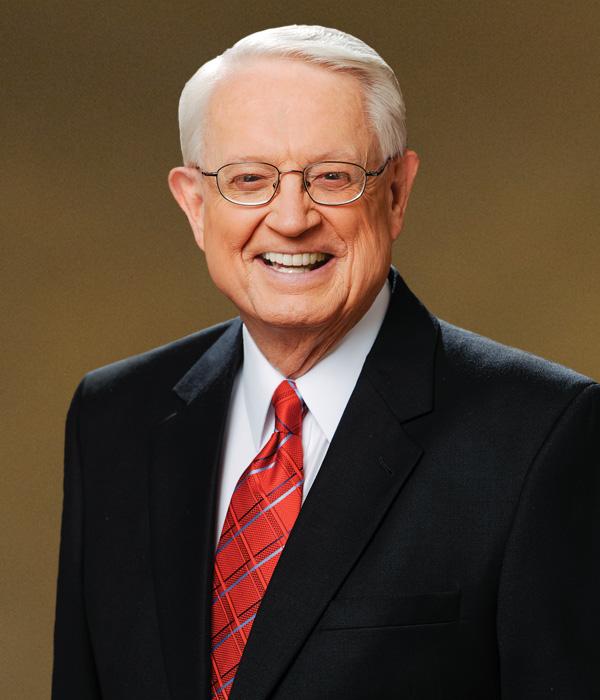
Chuck Swindoll
Worldview Variations and Interdependence
Although we’ve listed 8 basic, but universal philosophical categories that provide the primary composition of a person’s worldview, many of these world view categories may overlap into a category of another. i.e. Postmodernism is both a methodological and an epistemological approach to one’s view of the world. Also, there are other areas which also contribute to our worldview composition such as aesthetics or subcategories like one’s cosmology. But for the most part, we can suffice it to say that with the 8 identified categories above, we will arrive at a fairly accurate representation of our worldview makeup overall. The only thing left to do is find out what your worldview is…select the button below to be taken to the worldview test page